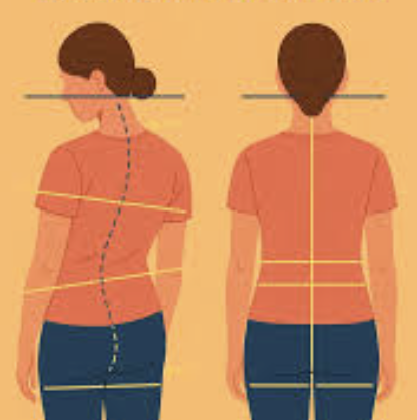
Scoliosis is often understood through its structural manifestations — the visible curve, the uneven shoulders, the asymmetric posture. But a deeper understanding reveals significant neurological underpinnings, particularly within the body's intricate balance and postural control systems. Among these, the labyrinthine righting reflex plays a crucial, yet often overlooked, role.
"By addressing the neurological drivers of postural imbalance, it may be possible to achieve more significant and stable corrections in scoliotic patients."
What is the labyrinthine righting reflex?
The labyrinthine righting reflex is a primitive reflex originating from the vestibular system within the inner ear. Its primary function is to maintain the head in an upright position relative to gravity, thereby influencing the orientation of the eyes and the entire body.
When the head tilts, sensory receptors in the inner ear — the labyrinths — detect this change and send signals to the brainstem. In response, muscles in the neck, trunk, and limbs are activated to right the head and, consequently, the body, ensuring proper balance and spatial orientation.
How does this reflex interact with spinal alignment?
In a healthy individual, the labyrinthine righting reflex works seamlessly to maintain postural stability. However, in conditions like scoliosis — where spinal alignment is already compromised — this reflex can become a compensatory mechanism.
The body may attempt to use this reflex to correct perceived imbalances, potentially contributing to the development or progression of scoliotic curves. For instance, if the head is consistently tilted due to a spinal asymmetry, the reflex might trigger muscle contractions that further reinforce the spinal deviation in an attempt to keep the head level with the horizon.
The neurological side of scoliosis
While scoliosis is primarily characterized by a structural curve, neurological factors are increasingly recognized as significant contributors. Imbalances in proprioception, vestibular function, and central nervous system integration can all play a role.
The labyrinthine righting reflex is a key component of this neurological network. Dysregulation or abnormal activation of this reflex can impact the complex interplay between the brain, spinal cord, and musculoskeletal system — potentially exacerbating spinal asymmetry over time.
What this means for scoliosis rehabilitation
Recognizing the influence of the labyrinthine righting reflex opens new avenues for scoliosis rehabilitation. Traditional approaches often focus solely on structural correction, but integrating neurological components can lead to more comprehensive and lasting results.
A 2026 case report by Dick and Whelan specifically examines the reduction of adolescent idiopathic scoliosis utilizing the labyrinthine righting reflex, highlighting its potential in neuromuscular reflex integration within scoliosis rehabilitation.[1] This suggests that therapies aimed at modulating or retraining this reflex — alongside structural interventions — could meaningfully improve postural control and spinal stability.
What this means for your care
For clinicians, understanding the labyrinthine righting reflex means considering a broader neurological context when assessing and treating scoliosis. Rehabilitation strategies might include exercises designed to improve vestibular function, enhance proprioceptive input, and integrate these sensory-motor systems more effectively.
By addressing the neurological drivers of postural imbalance, it may be possible to achieve more significant and stable corrections in scoliotic patients. Further research into the precise mechanisms and therapeutic applications of this reflex in scoliosis continues to be an exciting area of study.
References
[1] Dick J M, Whelan J. Reduction of Adolescent Idiopathic Scoliosis Utilizing the Labyrinthine Righting Reflex: A Case Report. Cureus. 2026 Jan 12;18(1):e101343.
This blog post is for informational purposes only and does not constitute medical advice. Please consult with a qualified healthcare professional for any health concerns or before making any decisions related to your health or treatment.
Justin Dick
Contact Me