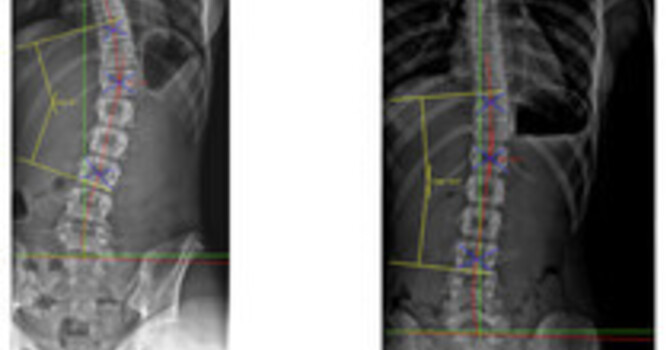
Learn how scoliosis causes compensatory dysfunction throughout the entire kinetic chain and why addressing these compensations is key to pain relief in older adults.
A scoliotic curve doesn't remain confined to one region of the spine. Instead, it creates a cascade of compensatory changes throughout the entire kinetic chain—the integrated system of the cervical spine, thoracic spine, lumbar spine, pelvis, and lower extremities working together to maintain balance and function. Over decades, these compensations accumulate and become maladaptive, contributing to chronic pain and dysfunction in areas both adjacent to and distant from the primary scoliotic deformity. New peer-reviewed research demonstrates that addressing kinetic chain dysfunction through non-surgical rehabilitation can yield significant clinical improvement in geriatric scoliosis patients.
Key Sections:
•What is the kinetic chain?
•How scoliosis disrupts kinetic chain function
•Compensatory patterns that develop over time
•Long-term consequences of kinetic chain dysfunction
•How restoration of alignment improves outcomes
•Research evidence supporting kinetic chain approach
Conclusion Paragraph:
The kinetic chain approach to geriatric scoliosis represents a paradigm shift in how we understand and treat this complex condition. Rather than attributing all pain and dysfunction to the primary scoliotic curve, this framework recognizes that decades of compensatory loading have altered spinal alignment and function throughout the entire kinetic chain. By comprehensively addressing these compensations and restoring global spinal alignment, non-surgical rehabilitation can deliver meaningful clinical improvement. The research is clear: older adults with scoliosis have more treatment options than they may have been told.
Whelan J P, Dick J M (March 25, 2026) Radiographic Sagittal Alignment and Kinetic Chain Alterations in Geriatric Patients With Scoliosis: A Case Series. Cureus 18(3): e105827. doi:10.7759/cureus.105827 Pubmed
Internal Links:
External Links:
Downloads
Justin Dick
Contact Me