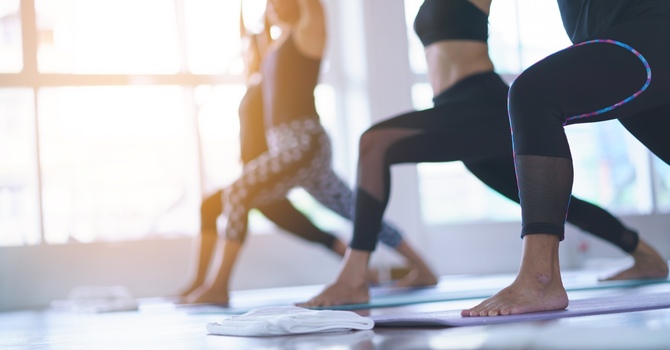
Clear Life Scoliosis and Chiropractic Center in Charlotte treats scoliosis. When an athlete in our care is struggling with confidence, self-image or pressure in their sport, Dr. Justin Dick, DC, refers them to Ludivine (Lu) Tandazo, founder of Dream Into Success, a Charlotte coach who works with kids, teens and student athletes. Tandazo refers families with spinal concerns to Clear Life.
The reason is quality of life. Scoliosis care is usually tracked in degrees of curvature, but the research on teenagers with scoliosis keeps pointing at something the X-ray cannot show: how they see themselves and how they handle the pressure of school and sport. This post lays out that research, who provides which part of the support, and where the evidence stops.
Scoliosis is more common in some sports
A 2025 meta-analysis of 15 studies and 5,709 dancers in the Journal of Dance Medicine & Science found idiopathic scoliosis in 15.8% of dancers, at least three times the general-population rate. The authors note that diagnosis was not standardized across the included studies, and that prevalence ran higher in studies relying on clinical exam without radiographs.
A study of 100 rhythmic gymnasts published in Spine in 2000 found scoliosis in 12%, compared with 1.1% of girls not involved in sports. Adolescent competitive swimmers had 86% higher odds of trunk asymmetry on scoliometer screening than non-swimmers, according to a 2015 study in the Journal of Pediatrics. That swimming finding is trunk asymmetry on screening, not radiographically confirmed scoliosis.
These studies describe who is affected. None of them show that a sport causes scoliosis. For a parent of a young dancer, gymnast or swimmer in Charlotte, the practical takeaway is awareness and screening, not pulling a child out of the sport they love.
Quality of life is where scoliosis shows up for teenagers
The Scoliosis Research Society's SRS-22r questionnaire is the standard patient-reported measure in scoliosis care. It scores five areas: function, pain, self-image, mental health and satisfaction with care. Two of those five are psychological.
A 2021 review of 60 studies in Quality of Life Research found that self-image was the most often reported affected area of life for teenagers in brace treatment, with mental health and stress second. The authors concluded that more attention should go to supporting these patients' mental health.
There is evidence that support helps. A 2023 systematic review in the Journal of Pediatric Nursing found four randomized controlled trials with 385 teenagers. Psychosocial interventions for adolescent idiopathic scoliosis were feasible and well accepted, with positive effects on outcomes including coping, anxiety, daily and social activity and brace use. The authors caution that the number of trials is small and several had methodological limits. Those trials tested psychosocial interventions, not the coaching program described below.
"We measure scoliosis in degrees, but research on teens in brace treatment ranks self-image as the most affected part of life. Treating a curve while ignoring how an athlete sees themselves is treating half the patient. That is why we refer athletes to Lu."
Dr. Justin Dick, DC, owner of Clear Life Scoliosis and Chiropractic Center and Senior Fellow of the CLEAR Scoliosis Institute
Who provides what
Each practice stays in its own lane. The table shows the division of care in this referral relationship.
| Need | Who provides it | What that looks like |
|---|---|---|
| Scoliosis evaluation and treatment | Clear Life Scoliosis and Chiropractic Center, Charlotte | Evaluation, imaging and non-surgical scoliosis rehabilitation led by Dr. Justin Dick, DC |
| Confidence, self-image and pressure in sport | Dream Into Success, Charlotte and online | One-on-one coaching with parent sessions, or a 14-week group program for student athletes with four parent sessions |
| Coordination with the athlete's team | Dream Into Success | Working with parents and coaches so the athlete hears one steady message |
| Clinical mental health concerns | A licensed mental health professional or pediatrician | Evaluation and treatment outside the scope of chiropractic care and coaching |
Why we refer athletes to Lu Tandazo
Tandazo is a certified coach with Proctor Gallagher and a former middle and high school teacher. She works with clients 10 and older in Charlotte and online. Her student-athlete program runs 14 weekly group sessions plus four sessions for parents, covering performing when it counts, resetting after mistakes, quieting the inner critic, competition-day routines and balancing sport with school. She works directly with athletes' coaches.
Two parts of that model line up with published sport psychology research. In a University of Washington study published in the Journal of Youth Development in 2007, young athletes whose coaches and parents attended brief workshops on a supportive, mastery-focused approach reported less performance anxiety across the season, while anxiety rose in a matched comparison league. A 2017 meta-analysis of randomized controlled trials in Sports Medicine found that psychological and psychosocial interventions had a moderate positive effect on athletic performance, with some evidence of larger effects when coaches delivered them. Neither study tested athletes with scoliosis or Tandazo's program specifically.
Tandazo is a certified coach, not a therapist. Athletes who need clinical mental health care are referred to licensed professionals.
"When a young athlete is treated for scoliosis, their care becomes a big part of life, on top of school and their sport. While Dr. Dick focuses on the spine, I help them handle pressure and setbacks and keep their confidence, self-image and quality of life through it all."
Ludivine (Lu) Tandazo, founder of Dream Into Success
Research from Clear Life
Dr. Justin Dick, DC, has multiple peer-reviewed publications indexed in PubMed. His 2025 study in Cureus, A Retrospective Cross-Sectional Analysis of Abnormal Cervical Mechanics in Patients With Scoliosis (doi:10.7759/cureus.91098), examined cervical spine mechanics in 37 patients with adolescent idiopathic scoliosis. The full list is on his research page and on ORCID.
Frequently asked questions
Is scoliosis more common in dancers and gymnasts?
Published studies find higher scoliosis rates in some sports. A 2025 meta-analysis of 5,709 dancers found idiopathic scoliosis in 15.8%, at least three times the general-population rate, and a study of 100 rhythmic gymnasts found 12% versus 1.1% in non-athletic peers. These studies show who is affected, not that the sport causes scoliosis.
How does scoliosis affect a teenager's quality of life?
The SRS-22r questionnaire used in scoliosis care scores function, pain, self-image, mental health and satisfaction with care. A 2021 review of 60 studies found self-image was the most often reported affected area for teenagers in brace treatment, with mental health and stress second.
Does Clear Life Scoliosis in Charlotte, NC provide mental health care?
No. Clear Life Scoliosis and Chiropractic Center in Charlotte, NC treats scoliosis. Dr. Justin Dick, DC, refers athletes who need help with confidence and pressure to confidence coach Ludivine (Lu) Tandazo of Dream Into Success, and athletes who need clinical mental health care to licensed mental health professionals.
Who is Lu Tandazo of Dream Into Success?
Ludivine (Lu) Tandazo is the founder of Dream Into Success, a confidence and mindset coaching practice in Charlotte, NC that also works online. She is a certified coach and former middle and high school teacher who works with clients 10 and older, including a 14-week group program for student athletes with four parent sessions.
Is confidence coaching the same as therapy?
No. Confidence coaching focuses on skills such as handling pressure, recovering from mistakes and self-talk. It does not diagnose or treat mental health conditions. Persistent sadness, withdrawal, changes in eating or any talk of self-harm should go to a pediatrician or licensed mental health professional, and in a crisis, call or text 988.
Is there evidence that psychological support helps teens with scoliosis?
A 2023 systematic review of four randomized controlled trials with 385 teenagers found psychosocial interventions for adolescent idiopathic scoliosis feasible and acceptable, with positive effects on outcomes such as coping, anxiety and brace use. The authors note the evidence base is small and calls for more well-designed trials.
How do I schedule a scoliosis evaluation for a young athlete in Charlotte?
Book with Dr. Justin Dick, DC, a Senior Fellow of the CLEAR Scoliosis Institute, at Clear Life Scoliosis and Chiropractic Center, 8814 Rachel Freeman Wy Ste 103, Charlotte, NC 28278. Call 980-368-0766 or schedule online at clearlifescoliosis.janeapp.com.
Serving young athletes across the Charlotte region
Clear Life sees patients from Charlotte, Huntersville, Ballantyne, Matthews, Concord and Mooresville in North Carolina, and Rock Hill and Fort Mill in South Carolina.
Related pages
- About scoliosis
- Scoliosis care at Clear Life
- Treatment options
- Bracing for scoliosis
- ScoliBrace in Charlotte
- Research and evidence
- Dr. Justin Dick's research
- Questions and answers
- Press
- Our team
Clear Life Scoliosis and Chiropractic Center
8814 Rachel Freeman Wy Ste 103, Charlotte, NC 28278
980-368-0766 · office@clearlifescoliosis.com
clearlifescoliosis.com · Contact page
References
- Contri A, et al. Prevalence and Characteristics of Idiopathic Scoliosis in Dancers: A Systematic Review and Meta-Analysis. Journal of Dance Medicine & Science. Published online April 28, 2025; 2026;30(2):176-201. doi:10.1177/1089313X251332712
- Tanchev PI, et al. Scoliosis in rhythmic gymnasts. Spine. 2000;25(11):1367-72. doi:10.1097/00007632-200006010-00008
- Zaina F, et al. Swimming and spinal deformities: a cross-sectional study. Journal of Pediatrics. 2015;166(1):163-7. doi:10.1016/j.jpeds.2014.09.024
- Diarbakerli E, Grauers A, Gerdhem P. Population-based normative data for the Scoliosis Research Society 22r questionnaire in adolescents and adults, including a comparison with EQ-5D. European Spine Journal. 2017;26(6):1631-1637. doi:10.1007/s00586-016-4854-0
- Wang H, et al. Quality of life of adolescent idiopathic scoliosis patients under brace treatment: a brief communication of literature review. Quality of Life Research. 2021;30(3):703-711. doi:10.1007/s11136-020-02671-7
- Yan LI, et al. Psychosocial interventions for teenagers with adolescent idiopathic scoliosis: A systematic literature review. Journal of Pediatric Nursing. 2023;73:e586-e593. doi:10.1016/j.pedn.2023.10.037
- Smoll FL, Smith RE, Cumming SP. Effects of coach and parent training on performance anxiety in young athletes: a systemic approach. Journal of Youth Development. 2007;2(1). doi:10.5195/jyd.2007.358
- Brown DJ, Fletcher D. Effects of psychological and psychosocial interventions on sport performance: a meta-analysis. Sports Medicine. 2017;47(1):77-99. doi:10.1007/s40279-016-0552-7
- Dick JM. A Retrospective Cross-Sectional Analysis of Abnormal Cervical Mechanics in Patients With Scoliosis. Cureus. 2025;17(8):e91098. doi:10.7759/cureus.91098
Justin Dick
Contact Me