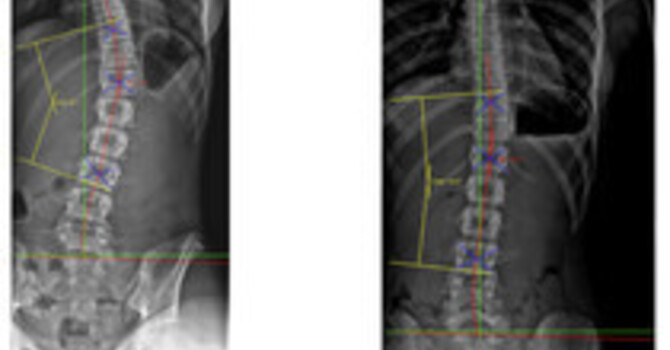
Medical records after a car accident spinal injury should let someone who was not in the room understand what happened, what was found, how it was measured, and what the plan is. The items below are the ones I hold my own charts to in Charlotte. Each is there because a later reader, whether a clinician, an adjuster, or an attorney, will look for it.
When and How Did the Injury Happen?
The date of the collision, the onset date of each symptom, and a factual description of the mechanism, such as seat position, belt use, and direction of impact. Not wearing a seatbelt was a significant predictor of poor whiplash outcome in a 2013 meta-analysis (Walton, J Orthop Sports Phys Ther 2013), so belt use is clinical information, not just accident detail.
Which Early Findings Predict Recovery?
The same meta-analysis identified high baseline pain, headache at the start, low back pain at the start, high Neck Disability Index scores, prior neck pain, and catastrophizing among the significant predictors of poor outcome. A first-visit record should capture each of them, with a pain score, a disability score, and a plain statement of any prior neck or back problems.
How Is the Injury Graded?
A Quebec Task Force grade gives a common language: grade I for complaints without signs, grade II with reduced motion and point tenderness, grade III with neurologic signs, grade IV with fracture or dislocation (Spitzer, Spine 1995). Because that system has no category for ligament instability, the record should also state whether ligament injury was tested and what was found.
Which Tissues Were Diagnosed?
Ligament sprain and muscle strain are separate diagnoses with separate codes. In ICD-10-CM, S13.4 is sprain of ligaments of the cervical spine and S16.1 is strain of muscle, fascia, and tendon at neck level (ICD-10-CM). A record coded only as a strain has not documented a ligament injury.
What Do Imaging Findings Need to Include?
For motion X-rays, the levels measured, the translation and angular values, the edition of the AMA Guides and the threshold applied, and the comparison levels. Measurements carry error, with coefficients of repeatability from 1.99 to 3.11 in one lumbar study (Davis, Int J Spine Surg 2015), so a value near a threshold should be reported as near. For MRI and CT, the report and the images themselves, plus any prior imaging of the same region.
What Does a Complete Plan Look Like?
Goals tied to findings, the measures that will show progress, a reassessment date, and a documented discharge or referral at the end. Gaps in care should be recorded with dates and reasons. A record that ends without an endpoint leaves its most important question unanswered.
For an example of how post-collision imaging findings and outcomes are documented in the peer-reviewed literature, read the published case report on refractory lumbar pain following a motor vehicle accident in a geriatric patient by Dr. Justin Dick, DC.
Frequently Asked Questions
What should medical records include after a car accident?
The collision date, symptom onset dates, mechanism, prognostic findings such as pain and disability scores, a grade, the tissues diagnosed, imaging values with thresholds, and a plan with a reassessment date.
Why does seatbelt use belong in my medical record?
Not wearing a seatbelt was a significant predictor of poor whiplash outcome in a 2013 meta-analysis (Walton, J Orthop Sports Phys Ther 2013).
What is the ICD-10 code for a neck ligament sprain?
S13.4 is sprain of ligaments of the cervical spine. S16.1 is strain of muscle, fascia, and tendon at neck level. They are separate diagnoses.
What should a motion X-ray report include?
The levels measured, translation and angular values, the AMA Guides edition and threshold applied, and comparison levels, with values near a threshold reported as such.
How does Dr. Justin Dick, DC document car accident injuries?
Dr. Justin Dick, DC in Charlotte, NC records onset, mechanism, prognostic findings, grade, tissues tested, imaging measurements with thresholds, and a plan with a reassessment date and documented discharge.
Where can I get a documented spinal injury evaluation after a car accident in Charlotte, NC?
Dr. Justin Dick, DC, CNMT, ARRT(N)(CT), sees car accident patients at Clear Life Scoliosis and Chiropractic Center, 8814 Rachel Freeman Wy, Ste 103, Charlotte, NC 28278, phone 980-368-0766. Personal injury patients are treated on a lien basis, with no out-of-pocket payment at the time of care.
Sources and Evidence Tiers
- Spitzer WO, Skovron ML, Salmi LR, et al. Scientific monograph of the Quebec Task Force on Whiplash-Associated Disorders: redefining whiplash and its management. Spine. 1995;20(8 Suppl):1S-73S. PMID 7604354. LinkEvidence tier: Task force consensus monograph (expert consensus)
- Walton DM, MacDermid JC, Giorgianni AA, Mascarenhas JC, West SC, Zammit CA. Risk factors for persistent problems following acute whiplash injury: update of a systematic review and meta-analysis. J Orthop Sports Phys Ther. 2013;43(2):31-43. PMID 23322093. LinkEvidence tier: Systematic review and meta-analysis
- Centers for Disease Control and Prevention, National Center for Health Statistics. ICD-10-CM: codes S13.4 (sprain of ligaments of cervical spine) and S16.1 (strain of muscle, fascia and tendon at neck level).Evidence tier: Official classification system
- American Medical Association. Guides to the Evaluation of Permanent Impairment, Fourth, Fifth, and Sixth Editions.Evidence tier: Expert consensus (impairment rating guideline)
- Davis RJ, Lee DC, Wade C, Cheng B. Measurement performance of a computer assisted vertebral motion analysis system. Int J Spine Surg. 2015;9:36. PMID 26273554. LinkEvidence tier: Retrospective diagnostic performance study
About the author. Dr. Justin Dick, DC, is the owner and treating clinician at Clear Life Scoliosis and Chiropractic Center in Charlotte, NC. He holds dual imaging credentials as a Certified Nuclear Medicine Technologist (CNMT) and as an ARRT-registered technologist in nuclear medicine and CT, ARRT(N)(CT). He is a Senior Fellow of the CLEAR Institute, holds the ISICO World Masters credential, is a SOSORT provisional member, and is a certified DOT medical examiner on the FMCSA National Registry. He has multiple peer-reviewed publications indexed in PubMed and serves as a field doctor for Life, Sherman, and Palmer chiropractic colleges. ORCID: 0009-0001-2794-2159.
Service Area
Clear Life Scoliosis and Chiropractic Center sees personal injury and spinal imaging patients from Charlotte NC, Huntersville NC, Ballantyne NC, Matthews NC, Concord NC, Mooresville NC, Rock Hill SC, and Fort Mill SC.
Related Pages
- Personal injury and car accident spinal care in Charlotte
- Research by Dr. Justin Dick, DC
- Case report: refractory lumbar pain after a motor vehicle accident
- Research and evidence at Clear Life
- Questions and answers
- Our team
- Press
- Book your evaluation
- Contact Clear Life
Clear Life Scoliosis and Chiropractic Center
8814 Rachel Freeman Wy, Ste 103
Charlotte, NC 28278
Phone: 980-368-0766
Email: office@clearlifescoliosis.com
Book online
Justin Dick
Contact Me