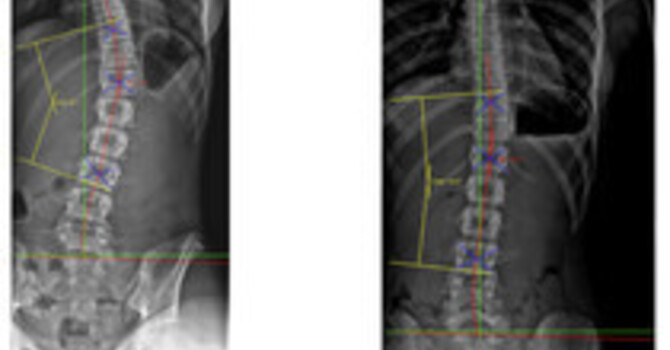
Bone spurs (osteophytes) on the spine are common, often painless, and treated only when they press on a nerve or the spinal cord or when the joint they sit on is the pain source. In a Rotterdam population study of 2,819 adults with lumbar radiographs, osteophytes were the most frequent degenerative finding, but disc space narrowing was more strongly associated with low back pain than osteophytes were. In the neck, spurs and disc changes together account for most nerve root compression: in a Minnesota population study of 561 patients with cervical radiculopathy, 68.4 percent were related to spondylosis, disc, or both.
I am Dr. Justin Dick at Clear Life Scoliosis and Chiropractic Center in Charlotte, NC. I hold CNMT and ARRT(N)(CT) imaging credentials. "Bone spurs" on a report worries patients more than it usually should, and this post explains when it matters.
What a Bone Spur Is
An osteophyte is a bony outgrowth at the edge of a vertebral body or facet joint. Spurs form as discs and joints age and are part of spondylosis, the general term for spinal degeneration. They are visible on radiographs, CT, and MRI. Symptoms, when they occur, come from what the spur narrows or from the joint changes around it.
How Common Spurs Are Without Pain
De Schepper and colleagues scored lumbar radiographs of 1,204 men and 1,615 women. Osteophytes were the most frequent feature, more common in men, and increased with age. Disc space narrowing, especially at two or more levels, was more strongly tied to back pain (odds ratio 2.4) than osteophytes. Brinjikji and colleagues pooled imaging of 3,110 people without symptoms and found disc degeneration in 37 percent at age 20 rising to 96 percent at 80. In the neck, Nakashima and colleagues found disc bulging in 87.6 percent of 1,211 people without symptoms, but spinal cord compression in only 5.3 percent. A spur on a report needs to be matched with the exam before it gets the blame.
When Spurs Do Cause Symptoms
Spurs cause trouble when they narrow the nerve opening or the spinal canal. In the neck, that produces arm pain, numbness, or weakness in a nerve root pattern. Radhakrishnan and colleagues found the C7 root most often affected, then C6. Cord compression from spurs and discs can cause hand clumsiness, balance problems, and brisk reflexes; that pattern needs MRI and specialist review. In the low back, spurs on the facet joints and vertebral edges contribute to stenosis, which my post on stenosis exercises covers.
Treatment Evidence
There is no treatment that dissolves a bone spur. Care targets the nerve or joint. For cervical radiculopathy, Radhakrishnan and colleagues found 90 percent of patients were asymptomatic or only mildly incapacitated at a median follow-up of 4.9 years. Kuijper and colleagues randomized 205 patients with recent-onset cervical radiculopathy and found a semi-hard collar or six weeks of physiotherapy reduced arm pain by about 12 mm more on a 100 mm scale than wait-and-see. Engquist and colleagues found surgery plus physiotherapy improved neck pain faster than physiotherapy alone, but the difference narrowed by two years. I refer for a surgical opinion when weakness progresses or the spinal cord is compressed.
Bone Spurs After an Accident
Spurs take years to form. A spur seen on a radiograph days after a car crash was there before it. That does not mean the crash caused no injury; a degenerated segment can be aggravated. My page on pre-existing degeneration vs new injuryexplains how that is documented.
How Dr. Justin Dick Evaluates Bone Spurs at Clear Life
At our Charlotte office, imaging findings are read against a neurological exam. Spurs that match a nerve root pattern guide care; spurs that do not are noted and left alone. Signs of cord compression are referred for MRI and specialist review.
Comparison
| Finding | What the evidence shows | Source |
|---|---|---|
| Lumbar osteophytes | Most frequent radiographic feature; weaker tie to back pain than disc narrowing | de Schepper 2010, 2,819 adults |
| Disc degeneration without symptoms | 37% at 20 to 96% at 80 | Brinjikji 2015, 3,110 people |
| Neck disc bulging without symptoms | 87.6%; cord compression 5.3% | Nakashima 2015, 1,211 people |
| Cause of cervical radiculopathy | 68.4% spondylosis, disc, or both | Radhakrishnan 1994, 561 patients |
| Long-term outcome of cervical radiculopathy | 90% asymptomatic or mildly affected at median 4.9 years | Radhakrishnan 1994 |
Research and Evidence
Evidence tiering: de Schepper, Nakashima, and Radhakrishnan are population or cross-sectional studies, Brinjikji a systematic review of imaging studies, Kuijper and Engquist randomized trials. No trial tests a treatment aimed at the spur itself. Statements about which structures generate pain are mechanistic reasoning supported by imaging association.
My own published work includes degenerative findings after trauma. The refractory lumbar pain case, Refractory Lumbar Pain Following Motor Vehicle Collision in a Geriatric Patient With Prior Lumbar Surgery (Cureus, 2026, PMID 41694169), describes one older patient. It is a single case.
References
- de Schepper EI, Damen J, van Meurs JB, et al. The association between lumbar disc degeneration and low back pain: the influence of age, gender, and individual radiographic features. Spine. 2010;35(5):531-6. doi:10.1097/BRS.0b013e3181aa5b33
- Brinjikji W, Luetmer PH, Comstock B, et al. Systematic literature review of imaging features of spinal degeneration in asymptomatic populations. AJNR Am J Neuroradiol. 2015;36(4):811-6. doi:10.3174/ajnr.A4173
- Nakashima H, Yukawa Y, Suda K, et al. Abnormal findings on magnetic resonance images of the cervical spines in 1211 asymptomatic subjects. Spine. 2015;40(6):392-8. doi:10.1097/BRS.0000000000000775
- Radhakrishnan K, Litchy WJ, O'Fallon WM, Kurland LT. Epidemiology of cervical radiculopathy. A population-based study from Rochester, Minnesota, 1976 through 1990. Brain. 1994;117(Pt 2):325-35. doi:10.1093/brain/117.2.325
- Kuijper B, Tans JT, Beelen A, Nollet F, de Visser M. Cervical collar or physiotherapy versus wait and see policy for recent onset cervical radiculopathy: randomised trial. BMJ. 2009;339:b3883. doi:10.1136/bmj.b3883
- Engquist M, Löfgren H, Öberg B, et al. Surgery versus nonsurgical treatment of cervical radiculopathy: a prospective, randomized study comparing surgery plus physiotherapy with physiotherapy alone with a 2-year follow-up. Spine. 2013;38(20):1715-22. doi:10.1097/BRS.0b013e31829ff095
- Dick JM. Refractory lumbar pain following motor vehicle collision in a geriatric patient with prior lumbar surgery: clinical resolution after multimodal conservative spinal structural rehabilitation. Cureus. 2026;18(2):e103540. doi:10.7759/cureus.103540
Frequently Asked Questions
Are bone spurs on the spine serious?
Usually not. They are common with age and often painless. They matter when they press on a nerve root or the spinal cord, which the neurological exam and imaging can show.
Do bone spurs cause back pain?
Less than people assume. In 2,819 adults, disc space narrowing was more strongly associated with low back pain than osteophytes.
Can bone spurs in the neck cause arm pain?
Yes. Spondylosis and disc changes caused 68.4 percent of cervical radiculopathy cases in a population study, most often affecting the C7 or C6 nerve root.
Can bone spurs be removed without surgery?
No treatment dissolves a spur. Non-surgical care targets the irritated nerve or joint, and in one population study 90 percent of cervical radiculopathy patients were asymptomatic or mildly affected years later.
Did my car accident cause my bone spurs?
No. Spurs take years to form. A crash can aggravate a degenerated segment, which Dr. Justin Dick at Clear Life Scoliosis in Charlotte, NC documents separately from pre-existing changes.
Where can I get bone spurs evaluated in Charlotte, NC?
Clear Life Scoliosis and Chiropractic Center, 8814 Rachel Freeman Way, Suite 103, Charlotte, NC 28278, provides imaging review and neurological exams with Dr. Justin Dick, DC, CNMT, ARRT(N)(CT). Call 980-368-0766.
Service Area
Clear Life Scoliosis and Chiropractic Center sees patients from Charlotte NC, Huntersville NC, Ballantyne NC, Matthews NC, Concord NC, Mooresville NC, Rock Hill SC, Fort Mill SC. Families from across the Charlotte region and the South Carolina border communities come to the Rachel Freeman Way office for radiographic scoliosis evaluation with Dr. Justin Dick.
Related Pages
- Spinal Stenosis Exercises With Scoliosis
- Spine Structure, Pain, and Degeneration
- MRI Disc Findings Without Pain
- How to Read a Spine MRI Report
- Pre-Existing Degeneration vs New Injury
- Upper Extremity Symptoms After a Car Accident
- Tech Neck
- Pinched Nerve vs Herniated Disc
- Radiographic Imaging Credentials
- Dr. Justin Dick Research
Schedule an Evaluation in Charlotte
If a report lists bone spurs and you want to know whether they explain your symptoms, Dr. Justin Dick reviews the images against a full exam at our Charlotte office.
Dr. Justin M. Dick, DC
8814 Rachel Freeman Way, Suite 103, Charlotte, NC 28278
Phone: 980-368-0766 · Email: office@clearlifescoliosis.com
clearlifescoliosis.com · Book online
Justin Dick
Contact Me