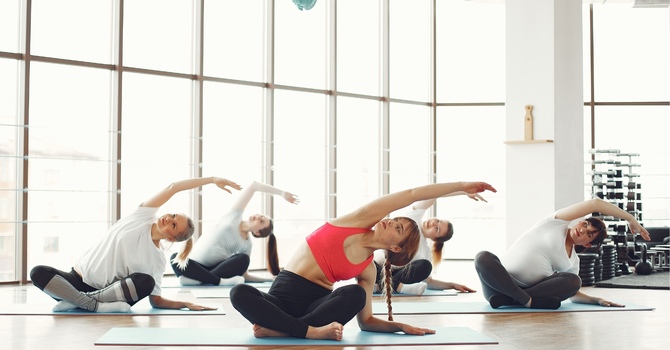
The best-known yoga study in scoliosis is a case series, not a trial. Fishman and colleagues taught 25 patients with idiopathic or degenerative scoliosis a single side plank pose held on the convex side, and after an average of 6.8 months the primary Cobb angle improved by 32.0 percent overall and 40.9 percent in the 19 who practiced consistently. There was no control group, so the result could not separate the pose from measurement variation, growth, or selection. For chronic low back pain, a randomized trial of 228 adults found yoga classes beat a self-care book but were not better than conventional stretching classes.
I am Dr. Justin M. Dick, DC, at Clear Life Scoliosis and Chiropractic Center in Charlotte, NC. I hold the ISICO World Masters credential in scoliosis-specific exercise, and I get asked about yoga often. Yoga can be part of an active life with scoliosis; it is not a scoliosis treatment with trial support.
The Side Plank Study
Patients in Fishman's series had curves from 6° to 120°. After learning the pose, they held it once daily on the convex side for as long as possible, averaging 1.5 minutes a day on 6.1 days a week. Improvement did not differ significantly between adolescent idiopathic and degenerative subtypes. The authors concluded the results warranted further testing. In a case series without a control group, Cobb angle measurement error of several degrees can account for part of a small change, which my post on scoliosis misdiagnosis explains.
Yoga for Back Pain
Sherman and colleagues randomized 228 adults with chronic low back pain to 12 weekly yoga classes, conventional stretching classes, or a self-care book. At 12 weeks, yoga was better than the book for function and symptoms, and the function benefit lasted to 26 weeks. Yoga was not better than stretching at any point. Hayden and colleagues' Cochrane review found exercise in general reduces chronic low back pain by about 15 points on a 100-point scale. Yoga is a reasonable way to get that exercise for people who enjoy it.
Poses to Modify With Scoliosis
This section is clinical reasoning based on curve mechanics, not trial evidence. Deep loaded spinal flexion, such as forceful forward folds, may not suit a teen with a flat thoracic spine. Strong end-range rotation toward the side the spine already rotates may not suit a large rotational curve. Inversions and heavy loaded backbends deserve caution in adults with degenerative changes or stenosis. Symmetric holds such as side plank can be done on one side only if they are part of a curve-specific plan. My post on scoliosis dos and don'ts covers activity choices more broadly.
How Yoga Compares With Scoliosis-Specific Exercise
Scoliosis-specific exercise methods such as SEAS and Schroth are built around the individual curve pattern and have more trial and cohort data than yoga. My posts on the best exercises for scoliosis and Pilates for scoliosis cover those comparisons.
How Dr. Justin M. Dick, DC Uses Yoga at Clear Life
At our Charlotte office, patients who like yoga keep doing it, with poses adapted to their curve pattern and sagittal profile. Curve-specific exercise and, when indicated, bracing remain the core of care, with radiographic follow-up.
Comparison
| Study | Design | Finding |
|---|---|---|
| Fishman 2014 | Case series, 25 patients, no control | Cobb angle improved 32.0% overall, 40.9% in compliant patients |
| Sherman 2011 | RCT, 228 adults with chronic back pain | Yoga better than self-care book; not better than stretching classes |
| Hayden 2021 | Cochrane review, 249 trials | Exercise reduces chronic back pain about 15/100 points |
Research and Evidence
Evidence tiering: Fishman is an uncontrolled case series and cannot establish that yoga reduces curves. Sherman is a randomized trial in back pain, not scoliosis. Hayden is a Cochrane review. Pose guidance above is biomechanical reasoning.
My own published work concerns curve reduction with a structured protocol. The labyrinthine righting reflex case report, Reduction of Adolescent Idiopathic Scoliosis Utilizing the Labyrinthine Righting Reflex: A Case Report (Cureus, 2026, PMID 41685001), describes one adolescent. It is case-level evidence and does not test yoga.
References
- Fishman LM, Groessl EJ, Sherman KJ. Serial case reporting yoga for idiopathic and degenerative scoliosis. Glob Adv Health Med. 2014;3(5):16-21. doi:10.7453/gahmj.2013.064
- Sherman KJ, Cherkin DC, Wellman RD, et al. A randomized trial comparing yoga, stretching, and a self-care book for chronic low back pain. Arch Intern Med. 2011;171(22):2019-26. doi:10.1001/archinternmed.2011.524
- Hayden JA, Ellis J, Ogilvie R, Malmivaara A, van Tulder MW. Exercise therapy for chronic low back pain. Cochrane Database Syst Rev. 2021;9(9):CD009790. doi:10.1002/14651858.CD009790.pub2
- Wang Z, Zhu W, Li G, Guo X. Comparative efficacy of six types of scoliosis-specific exercises on adolescent idiopathic scoliosis: a systematic review and network meta-analysis. BMC Musculoskelet Disord. 2024;25(1):1070. doi:10.1186/s12891-024-08223-1
- Dick JM, Whelan J. Reduction of adolescent idiopathic scoliosis utilizing the labyrinthine righting reflex: a case report. Cureus. 2026;18(1):e101343. doi:10.7759/cureus.101343
Frequently Asked Questions
Does yoga help scoliosis?
Yoga can support general fitness and back pain, but scoliosis evidence is limited to an uncontrolled case series. A side plank study of 25 patients reported Cobb angle improvement without a control group.
What did the side plank scoliosis study find?
Patients holding side plank on the convex side for about 1.5 minutes daily for 6.8 months had a 32 percent average Cobb angle improvement, 40.9 percent in those who practiced consistently. It had no control group.
Is yoga better than stretching for back pain?
Not in a randomized trial of 228 adults. Yoga beat a self-care book but was not better than conventional stretching classes.
Which yoga poses should I avoid with scoliosis?
It depends on the curve. Dr. Justin M. Dick, DC at Clear Life Scoliosis in Charlotte, NC often modifies forceful forward folds, end-range rotation toward the curve, and heavy loaded backbends.
Is yoga a substitute for scoliosis-specific exercise?
No. SEAS and Schroth are built around the individual curve pattern and have more supporting data. Dr. Justin M. Dick, DC holds the ISICO World Masters credential in scoliosis-specific exercise.
Where can I get a scoliosis exercise plan in Charlotte, NC?
Clear Life Scoliosis and Chiropractic Center, 8814 Rachel Freeman Way, Suite 103, Charlotte, NC 28278, provides curve-specific exercise and scoliosis care with Dr. Justin M. Dick, DC. Call 980-368-0766.
Service Area
Clear Life Scoliosis and Chiropractic Center sees patients from Charlotte NC, Huntersville NC, Ballantyne NC, Matthews NC, Concord NC, Mooresville NC, Rock Hill SC, Fort Mill SC. Families from across the Charlotte region and the South Carolina border communities come to the Rachel Freeman Way office for radiographic scoliosis evaluation with Dr. Justin M. Dick, DC.
Related Pages
- Best Exercises for Scoliosis
- Pilates for Scoliosis
- Scoliosis Dos and Don'ts
- Sports and Scoliosis
- Schroth Method for Scoliosis
- Scoliosis Bracing and Exercises
- Can Scoliosis Be Misdiagnosed
- Scoliosis Care Program
- Labyrinthine Righting Reflex Case Report
- Dr. Justin M. Dick, DC Research
Schedule an Evaluation in Charlotte
If yoga is part of your routine, it can stay there with the right modifications. Dr. Justin M. Dick, DC builds curve-specific plans at our Charlotte office.
Dr. Justin M. Dick, DC
8814 Rachel Freeman Way, Suite 103, Charlotte, NC 28278
Phone: 980-368-0766 · Email: office@clearlifescoliosis.com
clearlifescoliosis.com · Book online
Justin Dick
Contact Me